A Duel in Ink: Meeting Lu Chaoji
A Duel in Ink: Meeting Lu Chaoji
Two Scrolls on the Wall
I was supposed to meet someone in San Francisco at 3:55 this afternoon.
At 3:55 I called. No answer. I called again. Still nothing.
So I went for a walk.
There was a small shop on the street. No particular reason, I just wandered in.
Then I looked up. Two pieces of calligraphy hung on the wall.
They were good. Steady structure, seasoned brushwork, the bearing of a real master. Not the kind of thing you hang just to fill a wall.
I asked the people in the shop, "Who wrote these?"
An older man in a sweater said, "I did."
I didn't quite believe him.
A copy shop, with work of that level on the wall, and the man who wrote it sitting next to the Xerox machine? I stayed polite, but I was sizing him up.
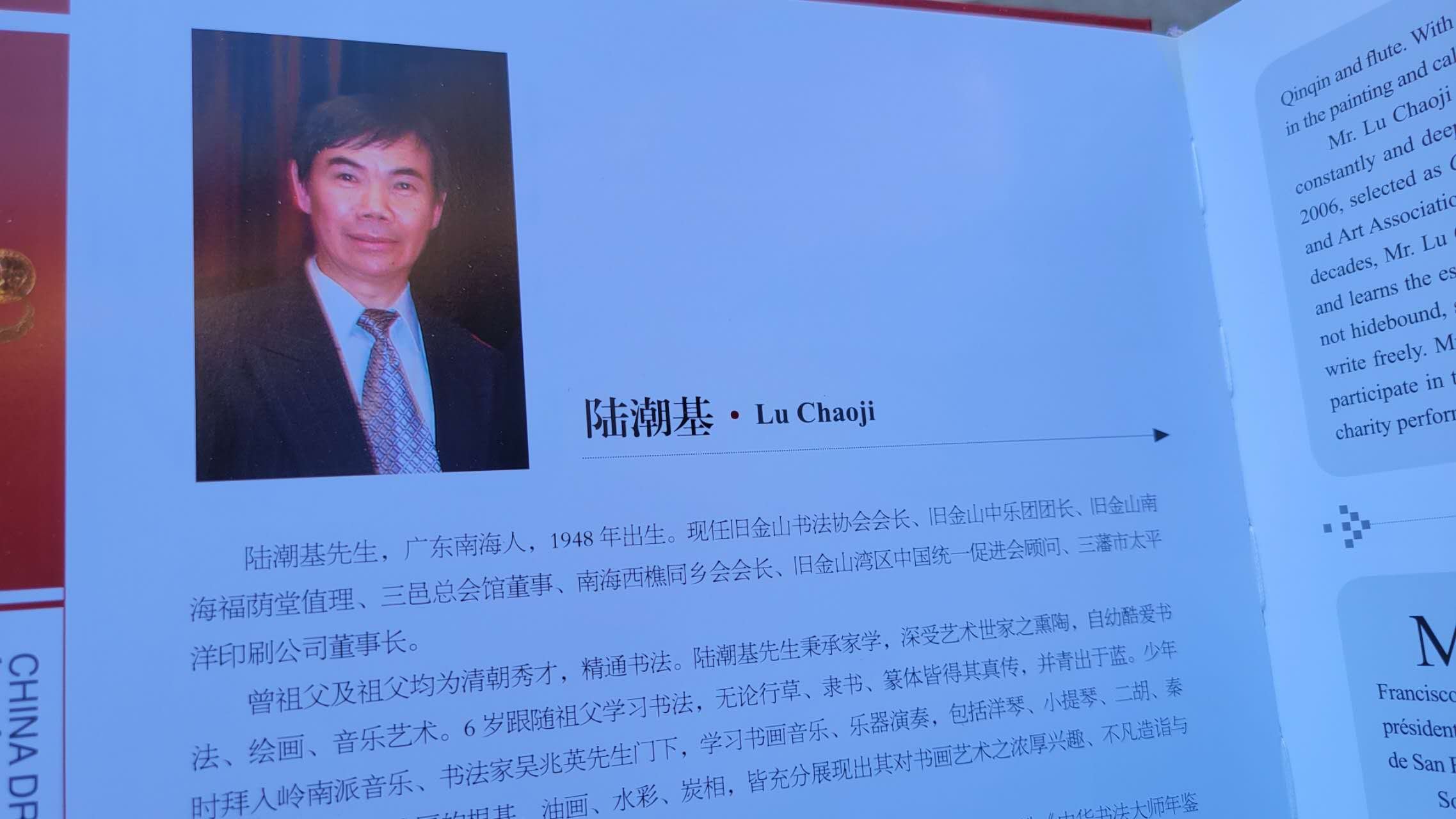
Only later did I learn who he was: Lu Chaoji (陆潮基), president of the San Francisco Calligraphy Association, chairman of this very print shop, and a man many people call the foremost living master of lishu, clerical script.
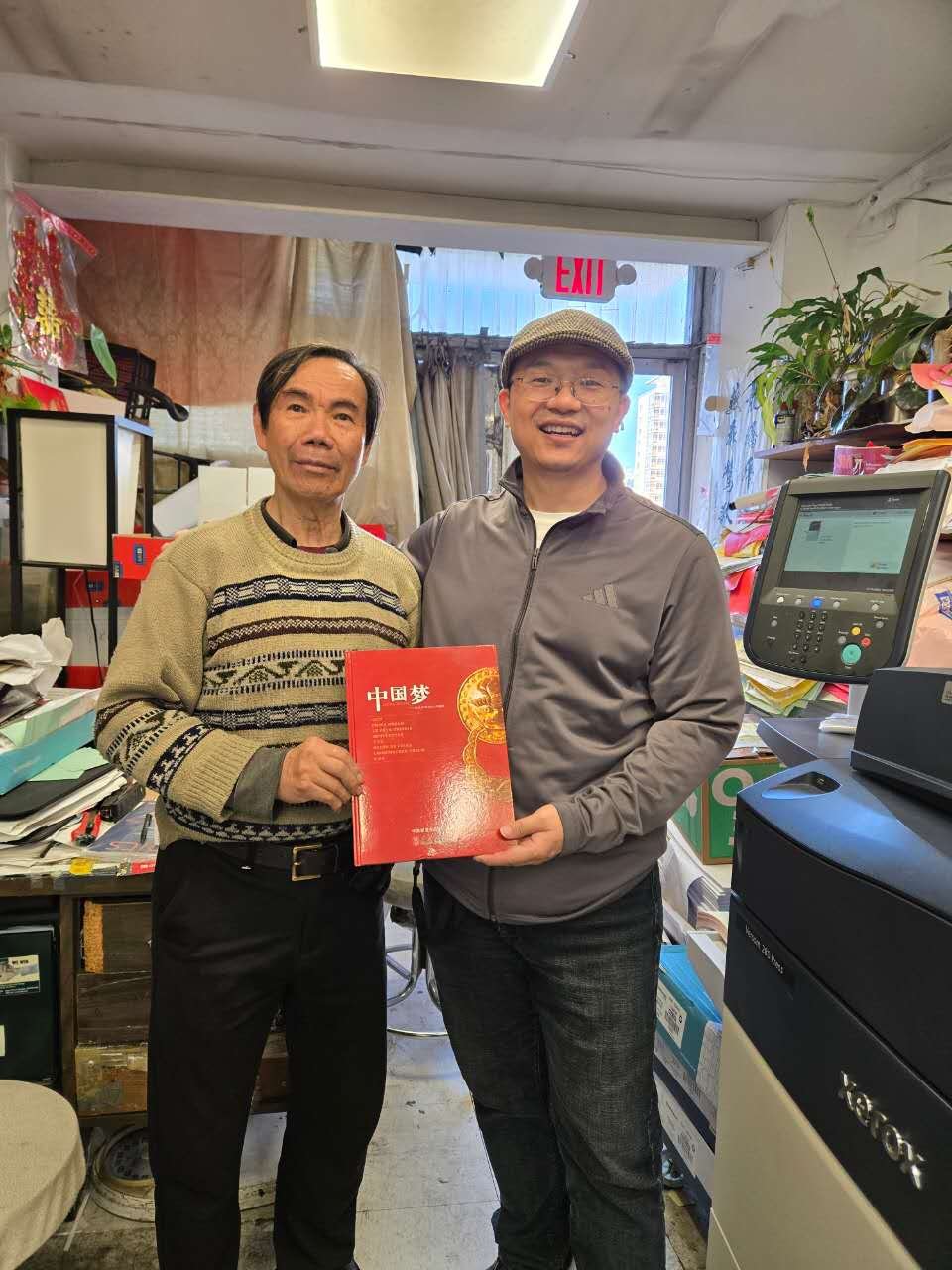
I never did meet the person I was waiting for. I met a calligrapher instead.
Admiration, Then Rivalry
Still half-skeptical, I showed him something I'd written earlier: 東方美學, Eastern Aesthetics. A casual piece.
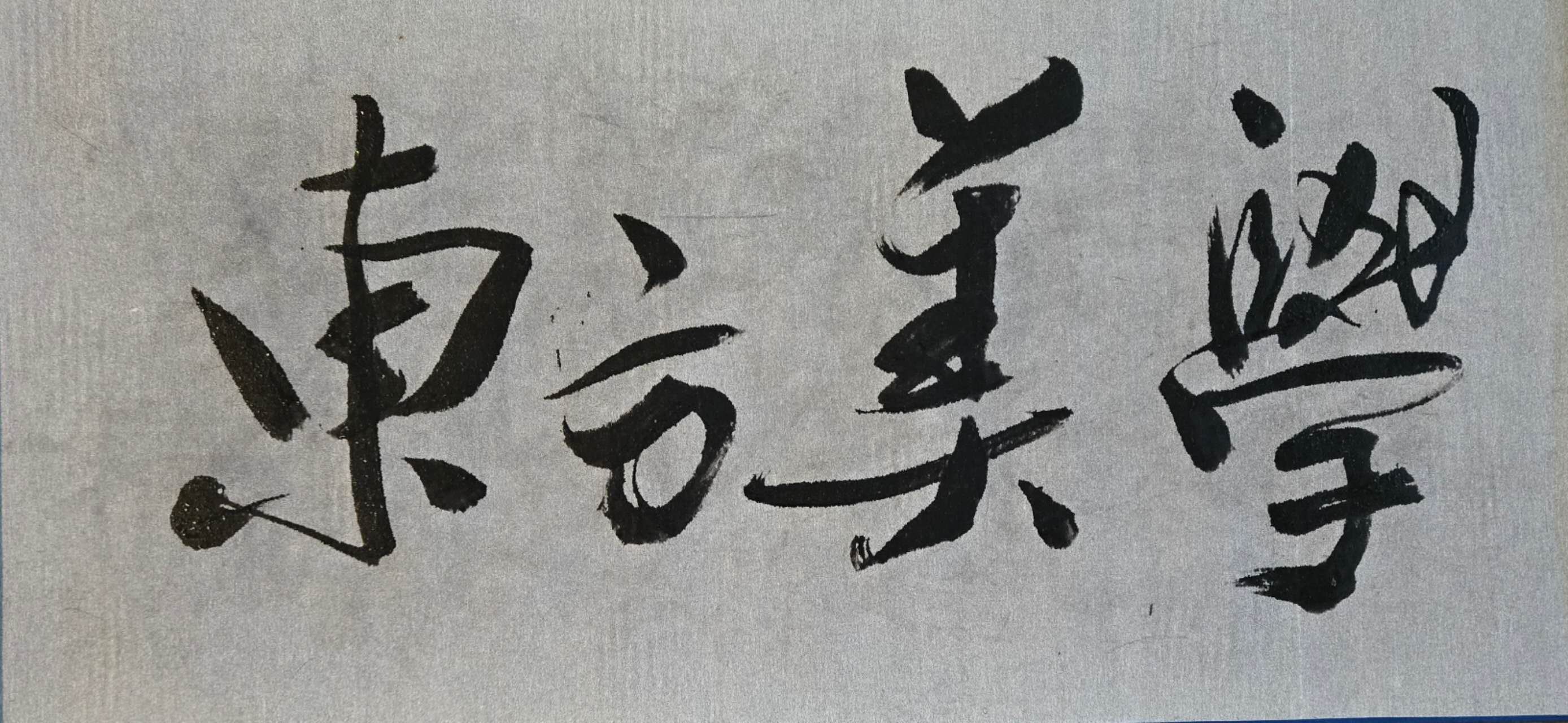
He looked it over and pointed at 東. Those two dots at the bottom, he said, could be written as a left-falling and a right-falling stroke.
Of course they could, I said. I just didn't write them that way.
Polite words, and we both heard what was under them: you have your way, I have mine.
Still, it stung a little. I write calligraphy too, and here I was being taken for someone who can't write a right-falling stroke?
So I pulled up another piece: Running-Script Miniature · Su Shi and Márquez. It pairs Su Shi's a straw cape in misty rain (一蓑烟雨) with One Hundred Years of Solitude (百年孤独).
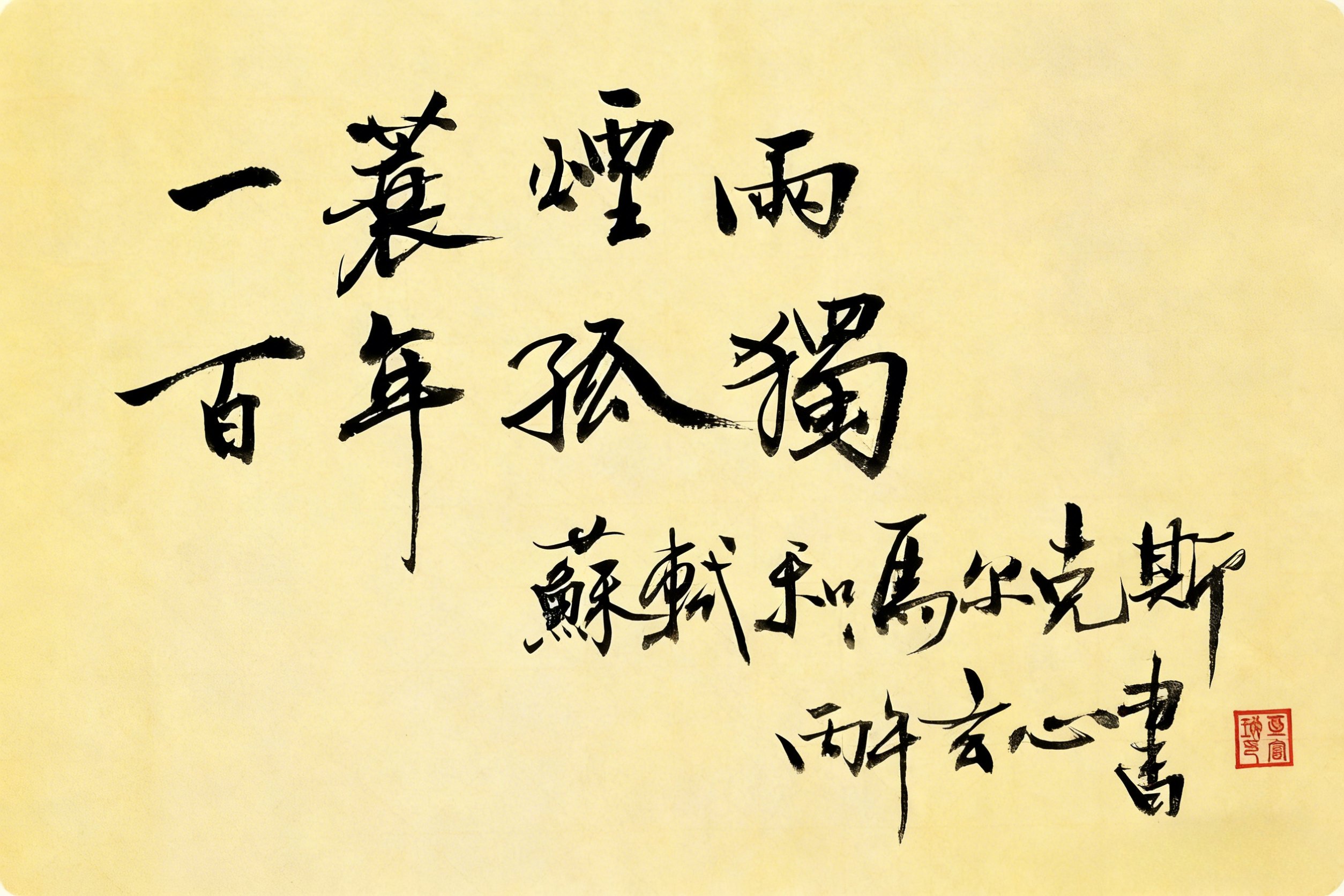
My style is a bit modern, I told him. But look at the right-falling stroke in 孤, and the one in 蓑. Not bad, right?
He looked and said: the one in 孤 is good.
So I can write a right-falling stroke after all. Ha.
A Worn Brush Tells the Truth
He didn't argue. He picked up a worn-out brush, dipped it in a little ink, and started writing on a sheet of old newspaper.
I was delighted. This, I thought, is the real thing.
With good paper and a good brush, anyone can look decent. A splayed brush on newsprint that drinks ink unevenly is where skill shows. The brush won't obey and the paper won't cooperate; all you have is decades of control in your hand. He didn't hesitate once.
He wrote a character, then handed me the brush and I wrote one. He wrote another, and so did I. Back and forth like that, we filled the newspaper with several characters, critiquing each other as we went.
Side by side, the difference was obvious: his strokes were many, mine were few.
He writes the way the old masters trained and wrote, spelling out every turn and leaving nothing out. Mine leans modern. I studied painting, after all, and my calligraphy carries some of that: I look at the overall shape and momentum, and I tend to compress and connect. If one stroke can carry it, I don't write two.
At one point I said his running script reminded me a bit of Fan Zeng.
He didn't reply.
My guess: in his eyes, Fan Zeng is a little on the weak side. Ha.
Then he said:
At your age, it's hard to find anyone who can write like this nowadays.
Coming from a man like him, that sentence was worth more than any certificate.
I told him the truth in return:
When I do this, I'm usually the best in the room. Meeting you today, I wouldn't dare say that.
Half courtesy, half concession.
Later, reading his book, I learned where he came from. His great-grandfather and grandfather were both xiucai, scholars who had passed the Qing imperial exams, and both were accomplished calligraphers. He began studying calligraphy with his grandfather at six. As a young man he studied under Wu Zhaoying, a Lingnan-school musician and calligrapher. Running script, cursive, clerical, seal: he learned them all from the source.
His Work
Before I left, he gave me a book: China Dream: Four Chinese Masters of Calligraphy and Painting (Foreign Languages Press, 2014). He is the first of the four; the others are Ouyang Zhongshi, Liu Dawei, and Feng Yuan.
To get a sense of the company he's in, look at the auction records of the other three:
| Artist | Representative sale | Price (RMB) |
|---|---|---|
| Feng Yuan | Seven Sages of the Bamboo Grove, Sungari International Auction (Zhongmao Shengjia), 2014 | ¥1,035,000 |
| Liu Dawei | Figures, Four Panels, Beijing Rongbao, 2019 | ¥1,012,000 |
| Ouyang Zhongshi | Running-script Snow, Beijing Rongbao, 2022 | ¥517,500 |
And listed ahead of all three was the man in the sweater standing next to the Xerox machine.
As he handed me the book, he made a point of saying one thing: he hadn't paid to be in it. Someone else paid him to be included.
I understood why he said it. In the calligraphy and painting world, plenty of people pay for pages and titles, and a glossy album proves nothing on its own. He wanted me to know his pages were an invitation, not a purchase.
And there are a lot of them. According to the table of contents, his section runs from page 4 to page 21, eighteen pages, more than any of the other three.
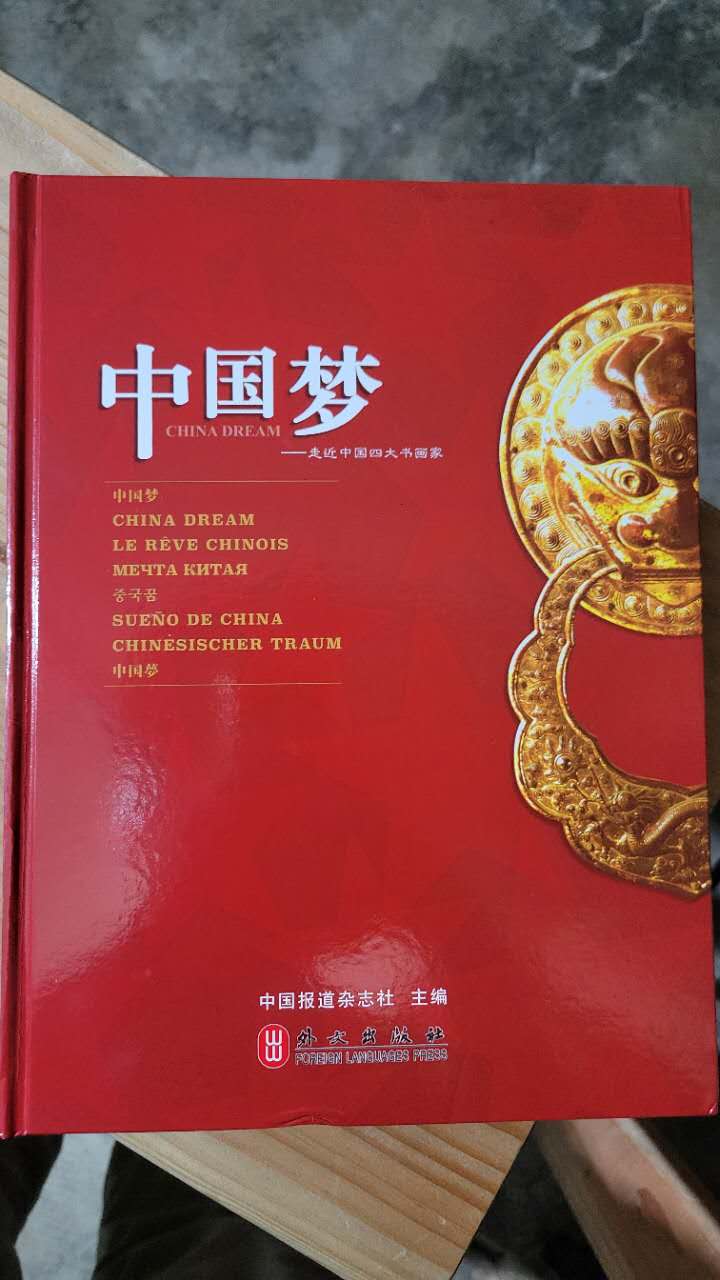
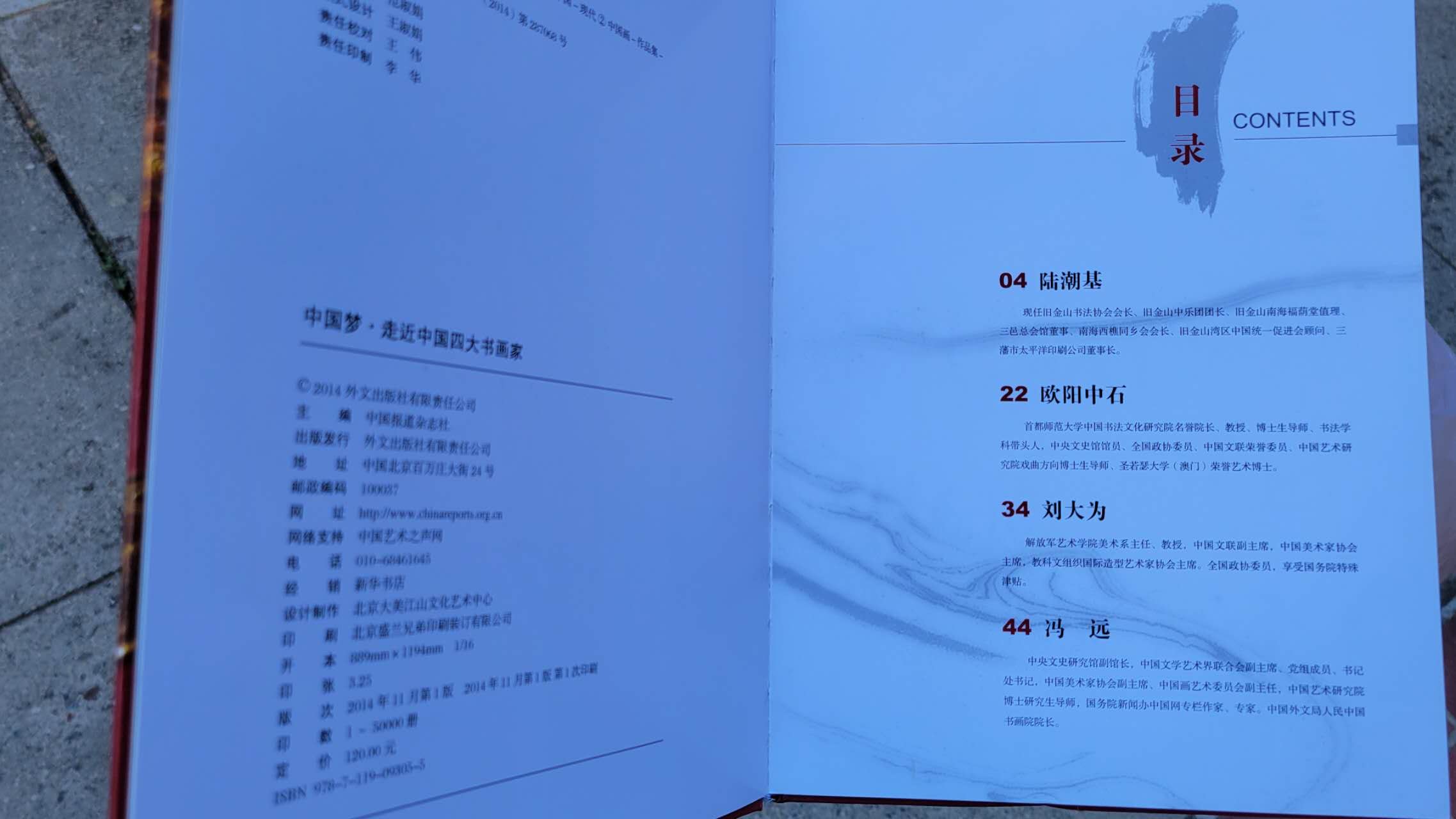
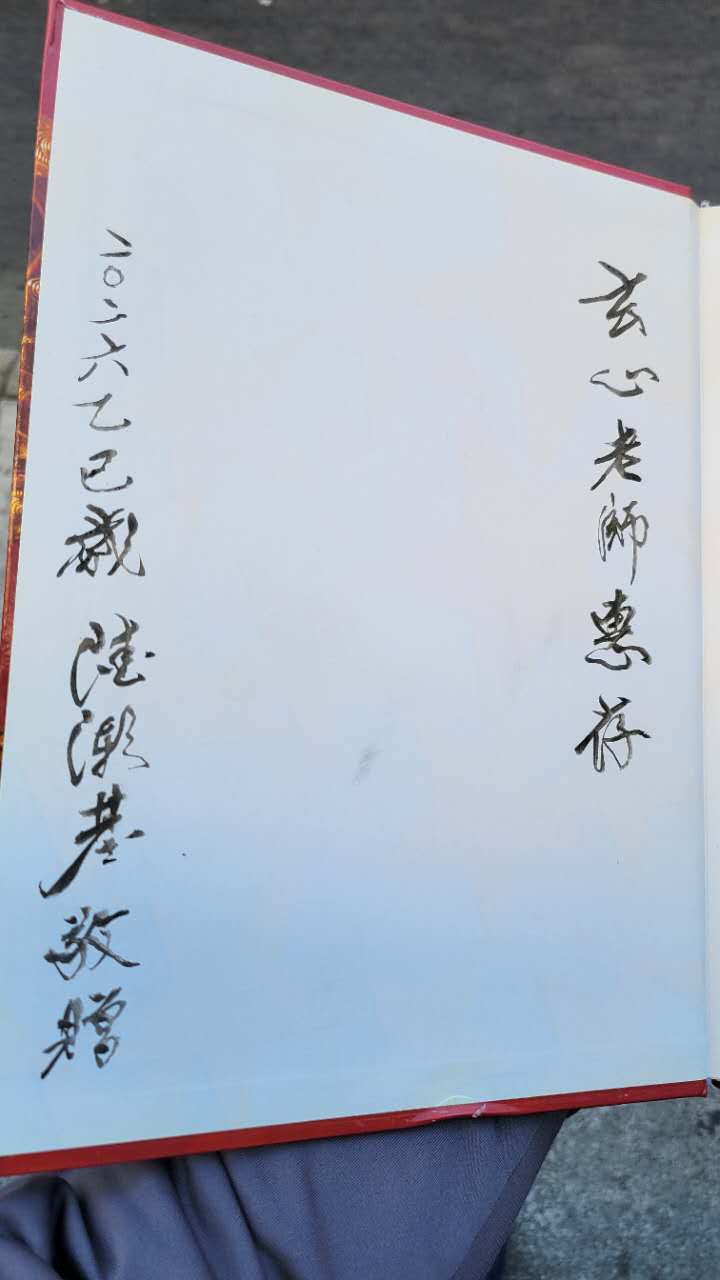
He inscribed it on the spot:
玄心老师惠存
陆潮基敬赠
For Teacher Xuan Xin to keep — respectfully, Lu Chaoji.
Turning the pages, I finally saw what he could really do.
Of all his scripts, it's his clerical script I love most.
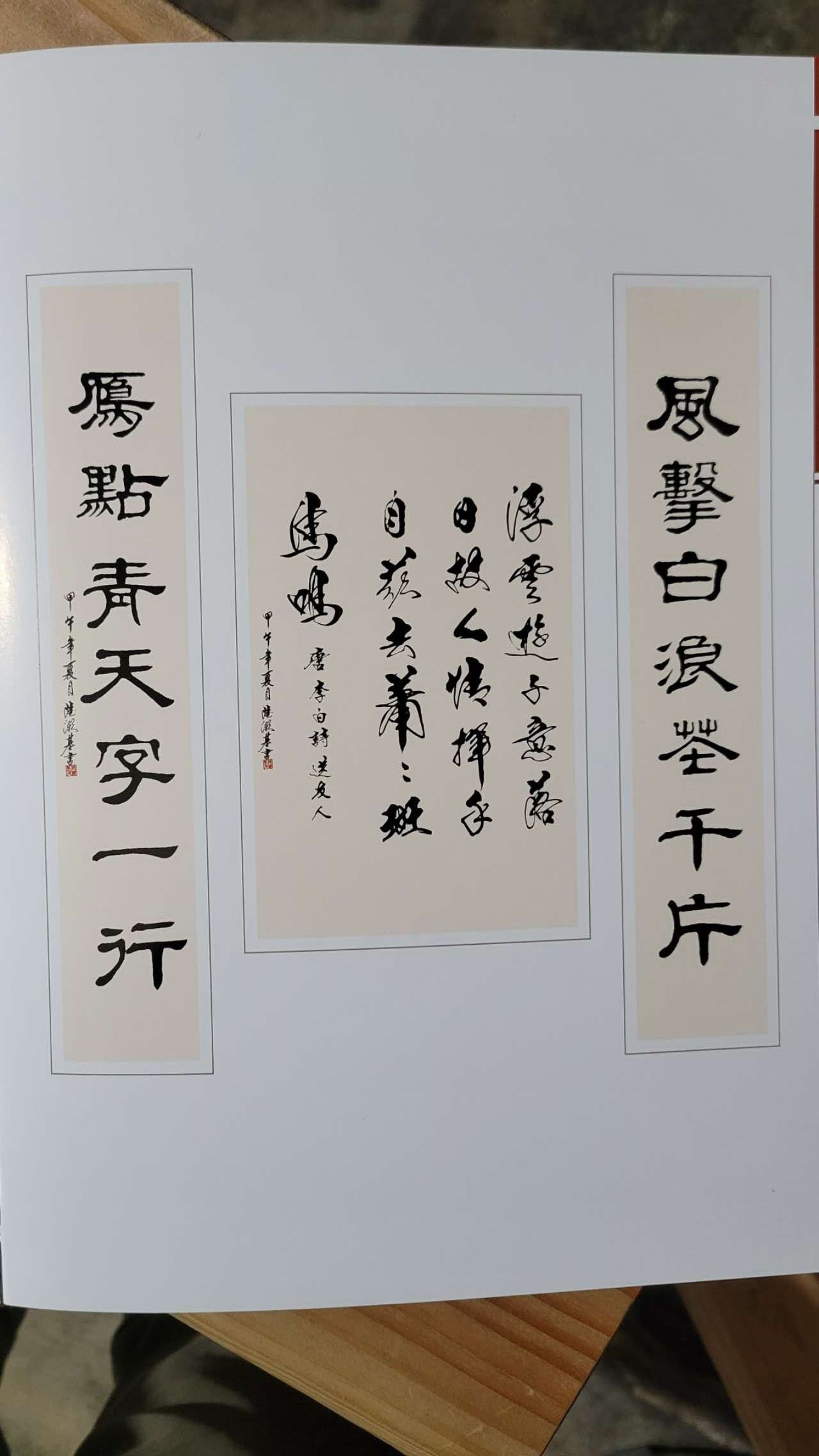
Take this couplet, square and solid, every wave-stroke crisp:
風擊白浪荃千片
雁點青天字一行
And between the two scrolls, a running-script rendering of Li Bai's Farewell to a Friend. Upright clerical on the sides, flowing running script in the middle. It was like watching one man speak two languages at once.
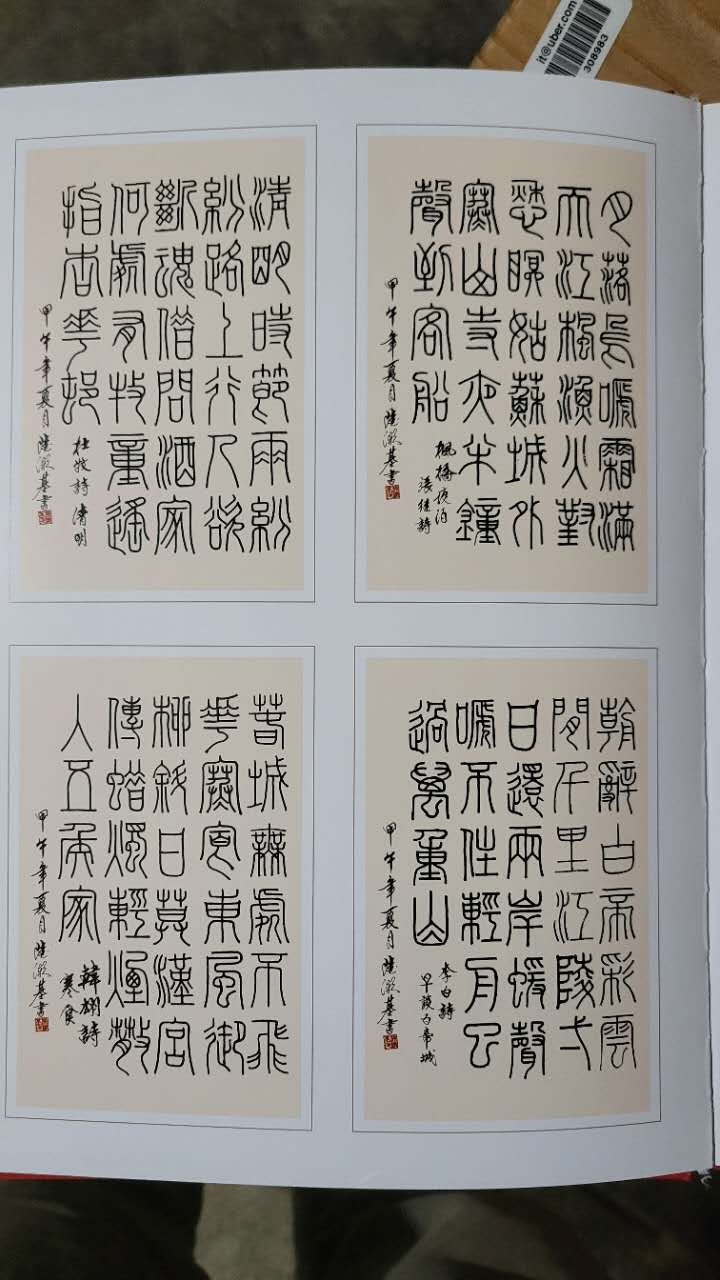
Four seal-script panels: Du Mu's Qingming, Zhang Ji's Night Mooring by Maple Bridge, Han Hong's Cold Food Festival, Li Bai's Leaving Baidi at Dawn.
And a full clerical-script Snow, to the tune Qinyuanchun, every character as steady as a stele inscription.
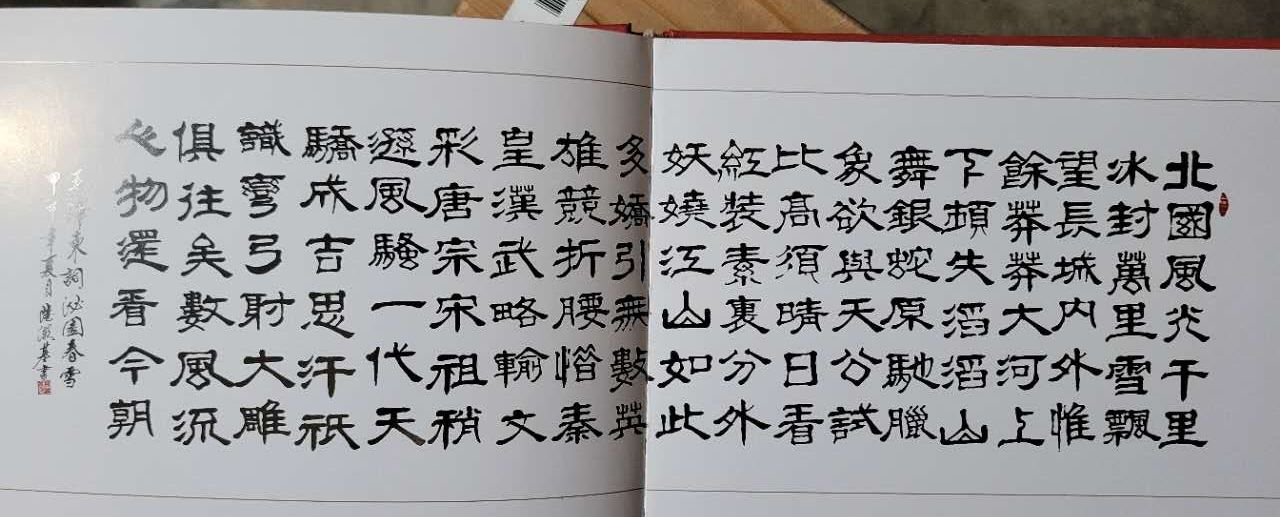
After seeing these, I understood those few strokes on the newspaper better: behind that worn brush were decades of work.
Kindred Spirits
We dueled with brushes, and we ended with a handshake.
I call it a duel, but really it was the most direct way to introduce ourselves. Small talk can't tell you how many years someone has put into the brush. A few strokes on paper can. He saw the care in my characters, and I saw in his decades of steady, unbroken practice. To meet an elder like him in San Francisco was my good fortune.
We were sorry to part. Before I left, we agreed: rematch another day.
Closing
The Li Bai poem in his book ends with we wave, and you are gone; the horses neigh as they part. In old poems, a farewell usually meant not knowing when you would meet again.
Ours was different. When we waved, the next round was already on the calendar.
The appointment I had today fell through; the meeting I never planned turned into a new one.
That's the best thing about making friends through the brush: you can compete without hard feelings, and either way, you come away with something.